
When it comes to peptide research, one of the most intriguing compounds is GHK-Cu, a copper peptide complex that has been studied for decades. Researchers have taken a keen interest in this compound because of its unique ability to bind copper ions and influence a wide range of biological processes.
While it is often discussed in popular contexts, it is important to emphasize that the Ghk-Cu peptide for hair and other forms of this compound are used exclusively for research purposes. The following article provides an in-depth look at the science of GHK-Cu, the chemistry behind it, and why it remains an important focus in peptide studies.
What is GHK-Cu?
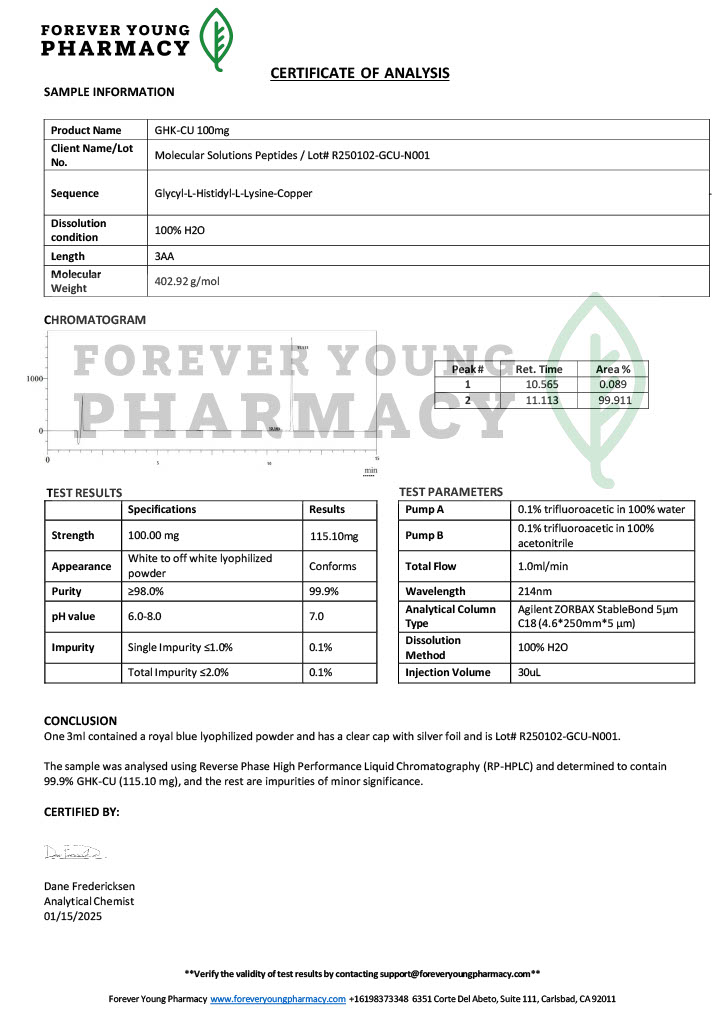
GHK-Cu is a small naturally occurring copper-binding peptide. The acronym GHK refers to the tripeptide sequence glycine-histidine-lysine, which has a strong affinity for copper. When this tripeptide binds to a copper ion, it forms the copper peptide complex known as GHK-Cu.
This peptide was first identified in the 1970s during plasma protein studies, and since then, researchers have sought to better understand how it interacts with copper in the body. Copper is an essential trace element, and its regulation is critical for various enzymatic and cellular processes. The GHK peptide’s ability to bind copper has made it a central molecule of interest in studies exploring copper metabolism, cellular health, and biochemical signaling.
The Chemistry of Copper Binding
At the molecular level, GHK has a high affinity for copper ions, specifically Cu(II). The histidine residue in the peptide plays a key role in chelating the copper ion, stabilizing it within the tripeptide structure. This binding capability makes GHK-Cu one of the most studied copper peptide complexes in research.
One of the unique aspects of copper-binding peptides like GHK-Cu is that they can regulate the availability of copper in biological systems. Copper is necessary for many enzymes, including cytochrome c oxidase and superoxide dismutase, but excess free copper can be harmful due to its potential to catalyze oxidative reactions. Peptides like GHK serve as carriers that bind copper ions and regulate their activity, preventing imbalance while ensuring bioavailability for critical functions.
The Role of Copper in the Body
Copper plays a diverse role in cellular activity. Research has shown that copper is required for processes such as energy production, connective tissue formation, neurotransmitter synthesis, and oxidative stress regulation. Because of its involvement in such fundamental pathways, researchers have long been interested in how copper-binding peptides like GHK-Cu might regulate or influence these processes.
The study of the Ghk-Cu peptide for hair offers a unique way to better understand how the body controls trace elements. Unlike simple mineral supplementation studies, copper peptide research allows scientists to examine how bioactive molecules act as mediators of copper activity at the cellular and molecular levels.
GHK-Cu in Biological Research
One of the reasons that the Ghk-Cu peptide for hair has attracted attention is its potential role in cellular signaling. Laboratory studies have shown that GHK-Cu can bind to various receptors and influence gene expression. Research indicates that thousands of genes may be upregulated or downregulated by copper peptide complexes, although much of this work is preliminary and requires more controlled study.
Researchers have also examined the role of GHK-Cu in tissue culture studies, where it has been shown to affect cellular activity. These findings have raised questions about whether copper peptides act as signaling molecules that help regulate repair and regeneration at the cellular level. From a research standpoint, this makes GHK-Cu a promising candidate for ongoing investigation in regenerative biology and molecular signaling studies.
Comparison with Other Peptides
GHK-Cu is not the only peptide studied for its interaction with trace elements. Other peptide complexes have been examined for their ability to transport metals like zinc and iron. However, the strong affinity of GHK for copper and the wide range of processes it appears to influence have made it one of the most significant copper-binding peptides in current research.
Comparisons between GHK-Cu and other tripeptides highlight how subtle changes in amino acid sequences can produce very different biological effects. For instance, peptides lacking histidine often show weaker binding affinities for copper, limiting their usefulness in studies of copper transport and regulation. The histidine residue in GHK is therefore considered essential to its function.
Current Areas of Study
Research into GHK-Cu spans a wide range of fields. Some of the most active areas of study include:
- Gene Expression Studies: Scientists are investigating how GHK-Cu influences gene expression, particularly in relation to cellular stress response, growth factors, and signaling pathways.
- Copper Transport Mechanisms: Because copper must be carefully regulated in the body, GHK-Cu provides a model for understanding how peptides act as carriers and buffers for trace metals.
- Cellular Repair Mechanisms: Laboratory experiments have indicated that GHK-Cu may play a role in cellular repair processes. Researchers are working to identify whether these effects are due to copper regulation, peptide signaling, or a combination of both.
- Aging and Cellular Health: Since copper peptides appear to regulate oxidative stress and tissue metabolism, GHK-Cu is often included in studies of aging and longevity at the cellular level. While much of this work is still early-stage, it provides valuable insight into the potential role of copper complexes in long-term cellular function.
Challenges in GHK-Cu Research
Despite decades of study, there are still challenges in fully understanding the use of the Ghk-Cu peptide for hair. One of the difficulties lies in separating the effects of copper itself from the effects of the peptide complex. Because copper is involved in so many processes, it is often difficult to isolate how much of a given cellular response is due to the presence of copper and how much is due to GHK’s signaling role.
Another challenge is that laboratory studies often differ in methodology, making it difficult to compare results across different research groups. Some studies use cell cultures, while others use animal models, and the outcomes may not always align. Standardizing research methods for peptides like GHK-Cu will be an important step for the future.
The Future of GHK-Cu in Research
Looking ahead, the study of GHK-Cu is likely to expand as interest in peptides continues to grow. Peptides represent a fascinating class of molecules because they can act as both structural units and signaling molecules. In the case of GHK-Cu, the dual role as a copper carrier and a signaling agent gives researchers a unique opportunity to study trace element regulation in the context of peptide biology.
Future studies may focus on clarifying the genetic and proteomic effects of GHK-Cu, understanding its interactions with enzymes and receptors, and identifying new applications for this peptide in biochemical and cellular research. The ability of GHK-Cu to influence a wide range of processes makes it one of the most versatile subjects in peptide research today.
Applications of the Ghk-Cu peptide for hair stand at the crossroads of peptide chemistry and trace element biology. As a copper-binding tripeptide, it plays an important role in regulating copper availability and potentially influencing gene expression and cellular activity. While much remains to be discovered, decades of research have highlighted its significance as a tool for exploring the complex interplay between peptides, trace elements, and cellular health.
From a research perspective, GHK-Cu continues to offer valuable insights into how the body regulates essential minerals and maintains cellular balance. By studying this copper peptide complex, researchers gain a deeper understanding of both the chemical and biological principles that govern health at the molecular level.
Disclaimer: All products on this site are for Research, Development use only. Products are Not for Human use of any kind. The statements made within this website have not been evaluated by the US Food and Drug Administration. The statements and the products of this company are not intended to diagnose, treat, cure or prevent any disease.